Training with Truffle Oil – The Tricky Stinky One – Part Two
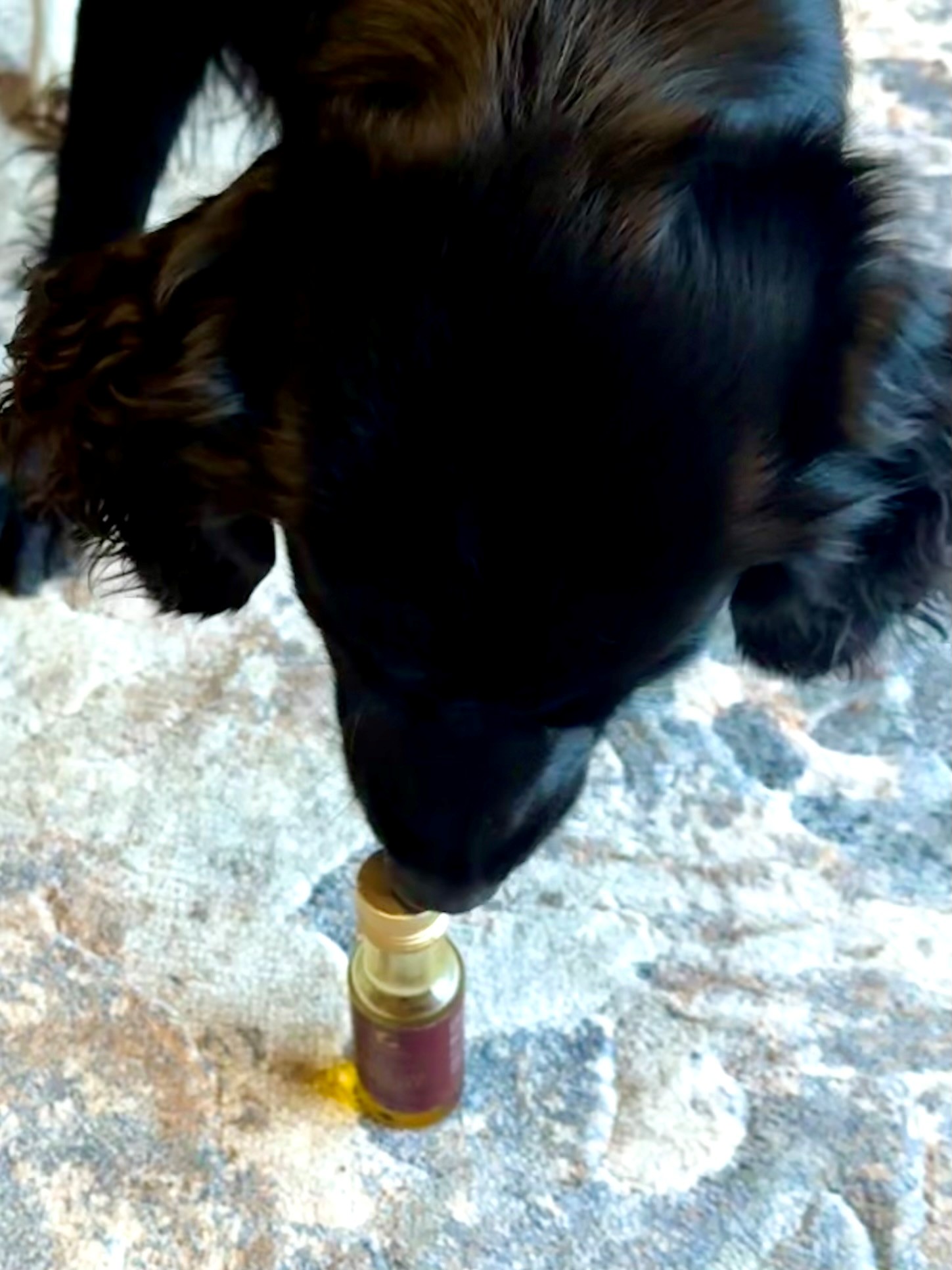
After years of working truffle oil as a target odour, I have learned it deserves far more respect and training time than it often gets. In this follow-on post from Part One, I share my insights and training tips for helping dogs (and handlers!) navigate the unique challenges of this complex scent.
Truffle oil often becomes the “add-on” scent after clove and gun oil in the Scentwork UK trialling progression. A bit of quick imprinting, and suddenly the expectation is that the dog will locate it just as easily as the other two, even when all three are present in a search area.
But how much dedicated training actually happens with truffle oil as a sole odour in area searches, rather than just during ORTs?
As discussed in my previous post, truffle oil is a bit of a shapeshifter. It vapes out quickly, it’s sticky, and it tends to drop and collect in odd ways. Watching dogs work this scent, I often find myself wondering about the impact of soak time and how much odour actually remains on the carrier compared to what’s already vaporised away.
A few years ago, I ran a small experiment with my own retriever, working a long brick wall with just one truffle hide. Nothing scientific, for my curiosity. Variables like wind, humidity, temperature, and soak time all play their part but the results were telling.
After around 20 minutes of soak time, she first picked up the odour about 15 metres away. Her signals were clear, and if I hadn’t known where the hide was, I would probably have started tasking her into likely spots, crevices, behind bins, pipes, all the usual suspects.
But then she disengaged completely, as if she had been mistaken. It wasn’t until we were within about a metre of the hide that she re-engaged and began working in earnest. Even then, it took noticeably longer to pinpoint than it would have with clove or gun oil.
That experience, and many others since has taught me that truffle oil really challenges your observation skills as a handler. The dog’s indication that they are “on odour” can be fleeting and subtle. It’s easy to miss. You might see a tiny head flick, a change in breathing, or a brief hesitation, and then it’s gone. Don’t ignore it. Make a mental note of that moment and keep working your area methodically, your dog picked up on something but it may not be nearly as close as you may think from your previous observation skills on gun oil or even clove.
So, if you are progressing onto truffle oil or you have experienced your own difficulties, here’s my advice:
- Train it as a stand-alone odour. Set searches with only truffle oil present.
- Give it soak time. Leave hides for at least 15 minutes before running your dog.
- Vary your hides. Use shallow and deeper placements, different heights, and both indoor and outdoor environments.
- Observe closely. Note how your dog’s body language shifts around this particular odour, those subtle cues are gold.
With consistent, focused training, your dog can absolutely learn to read truffle oil as effectively as any other target odour, but it does require time, patience, and respect for its unique characteristics.
So the lesson here ……
In my opinion this odour often gets treated as a quick add-on after clove and gun oil, competing teams eager to dive into the next level, but I have learnt it really deserves time, patience, and its own focused training. It’s a strange, sticky, fast-fading scent that challenges both dogs and handlers in fascinating ways.
Mandy Rigby
Instructor Article
Founder Canine Scentwork Academy
To read more articles join CSA Nosey News here